When I first visited a pearl farm in Vietnam, it wasn't the pearls that surprised me. It was the security.
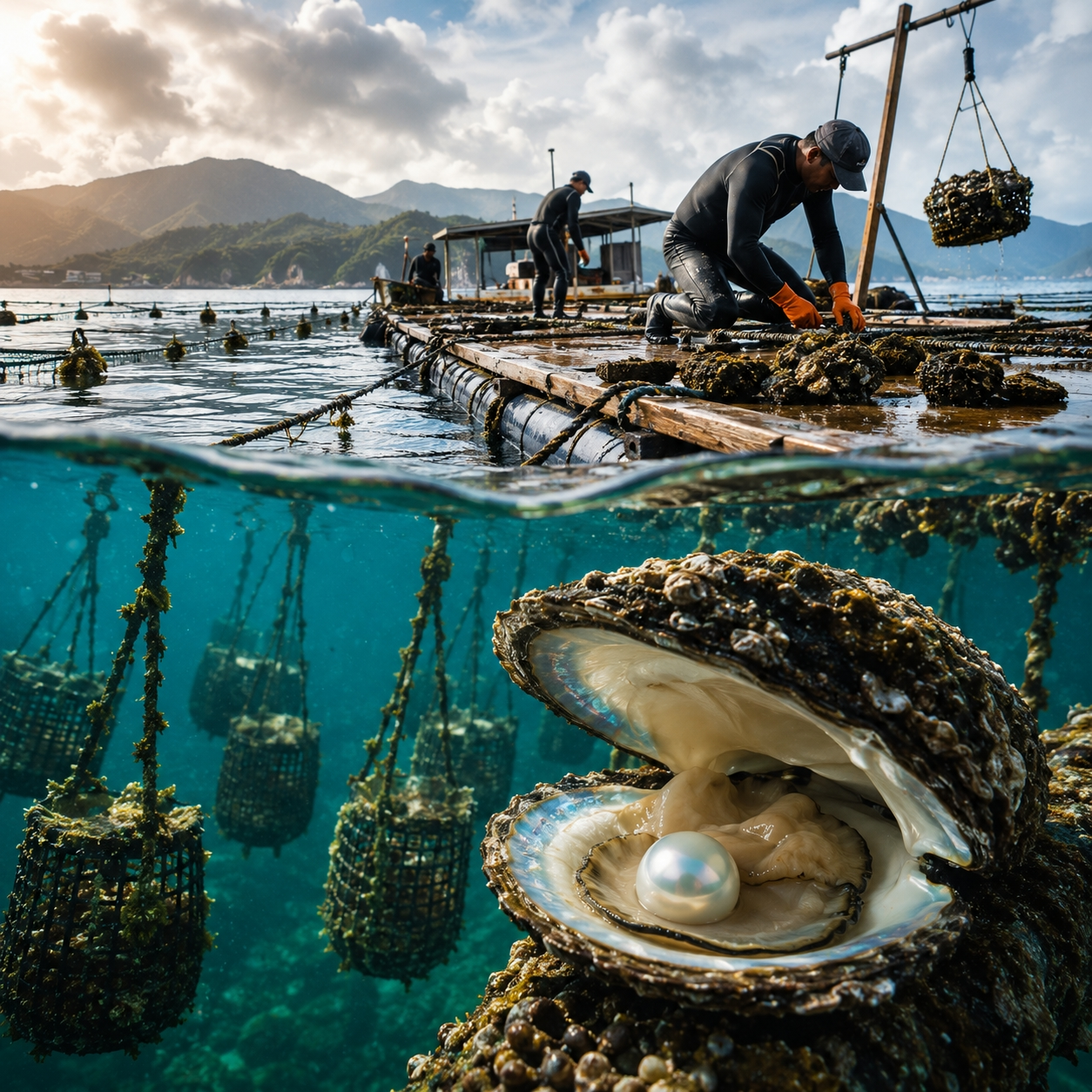
In the middle of the open sea, 24-hour security towers rise above the water. For the B2B pearl industry, a pearl farm is essentially an underwater repository of high-value assets with significant risk exposure.
The Anatomy of Living Capital
One of the unique characteristics of Vietnamese pearl farms is their mobility. These farms are enormous floating hubs. If water quality deteriorates or a typhoon approaches, the entire operation can be towed to a safer bay.
But mobility comes with a downside: vulnerability.
Every mollusk hanging from those suspended lines represents an investment that takes years to mature. A poaching raid or operational negligence can wipe out millions of dollars in value in a single day. That is why security is treated as an absolute priority.
Today, Vietnam is rapidly expanding its cultured pearl industry. The country produces Akoya pearls, Tahitian pearls, and South Sea pearls. Vietnam has become an increasingly important player in the global pearl market, and some Japanese companies have even established farms there to reduce production costs.
At this point, any experienced pearl buyer usually asks the same question: “If the cultivation technology is the same, why is Japanese Akoya pearl still considered the benchmark?”
“If the cultivation technology is the same, why is Japanese Akoya pearl still considered the benchmark?”
— Pearl Diary Editorial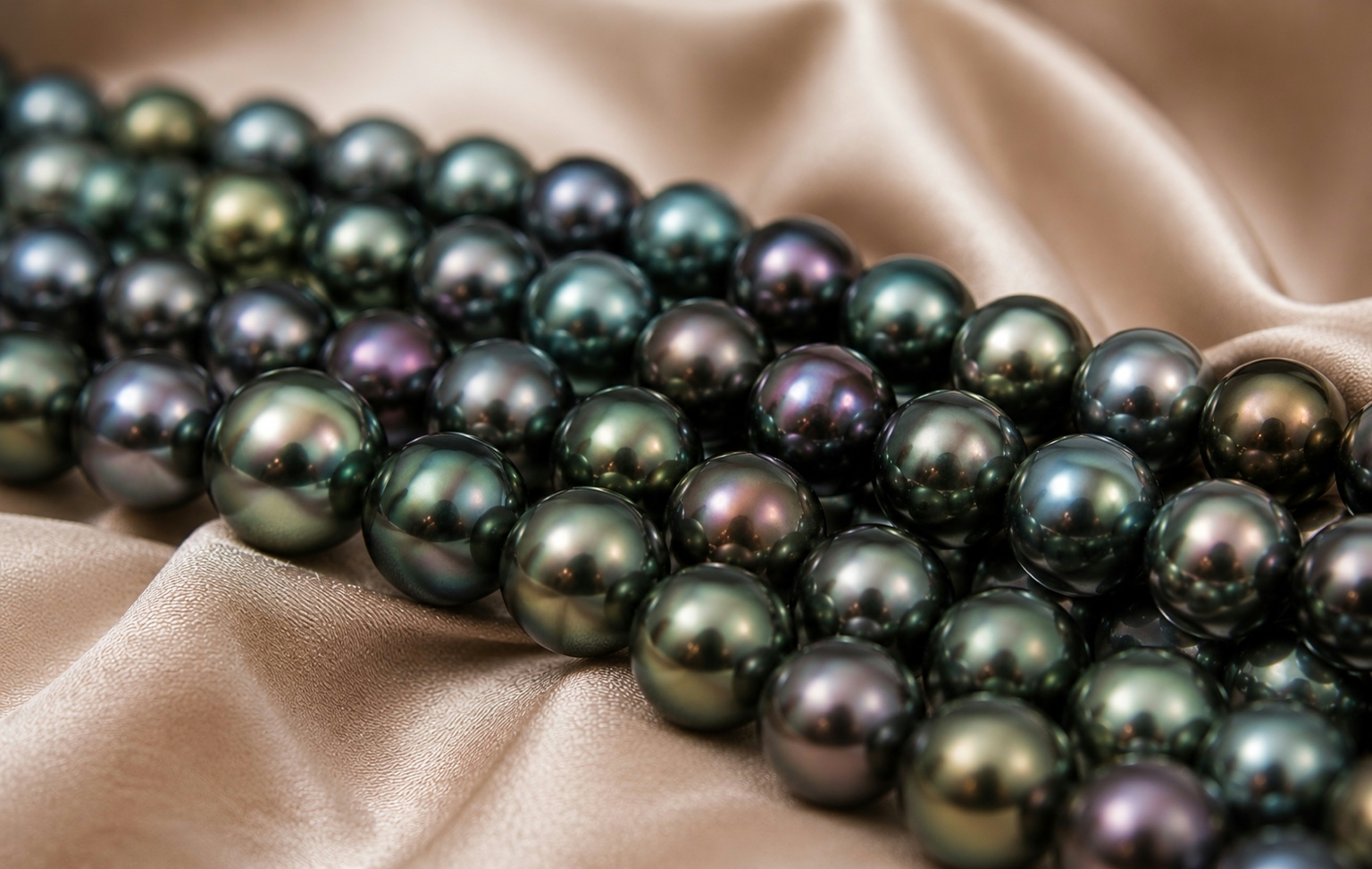
Tahitian cultured pearls — now also cultivated in Vietnamese waters alongside Akoya and South Sea varieties.
The Secret That Cannot Be Copied
The answer is not found in laboratories or in the skills of pearl technicians.
The secret lies in the character of the sea itself—something that cannot be patented, replicated, or shipped in a container.
Nacre quality is heavily influenced by environmental conditions. Climate, water temperature, and ocean currents directly determine the commercial characteristics of a pearl. In many ways, these natural factors dictate how the oyster builds its gemstone.
In Japan's cooler waters, the mollusk's metabolism slows down. Nacre forms in microscopic, exceptionally dense layers. This unique structure causes light to refract in a way that creates the famous “inner glow” effect for which Japanese Akoya pearls are renowned.
In the warmer waters of Vietnam, the growth cycle is faster. Vietnamese pearls are often more competitive in price and offer good commercial value, but their optical appearance is generally softer compared to the finest Japanese Akoya pearls.
What Does This Mean for Jewelry Brands?
For a jewelry brand, Vietnamese pearls can provide an ideal balance between cost efficiency and proven cultivation techniques, helping maintain healthy margins while delivering attractive quality.
Japanese pearls, on the other hand, represent a no-compromise position in the ultra-premium segment, where clients are willing to pay for extraordinary luster, depth, and rarity—qualities shaped by demanding natural conditions.
Technology can be copied and it can be transferred anywhere in the world.
But when it comes to the final value of a pearl, nature always has the last word.