If you think the price of a piece of jewelry depends on carat weight, gemstone clarity, or the value of the metal, you are still living in a world of old illusions. In modern business, a very different asset rules the game. Its name is storytelling.
An anonymous diamond sitting in a vault is just carbon. But a cheap glass bead once worn by a legend can generate millions of dollars in sales. Here is a real historical case of how an artificial pearl necklace sold for the price of a luxury sports car—and how a smart business turned it into a fortune.
The piece in question was not a rare natural pearl. It was not set in gold. It was not the work of a celebrated maison. It was a triple strand of Czech glass beads with a pearlescent coating, purchased for thirty-five dollars. What made it extraordinary was the woman who wore it.
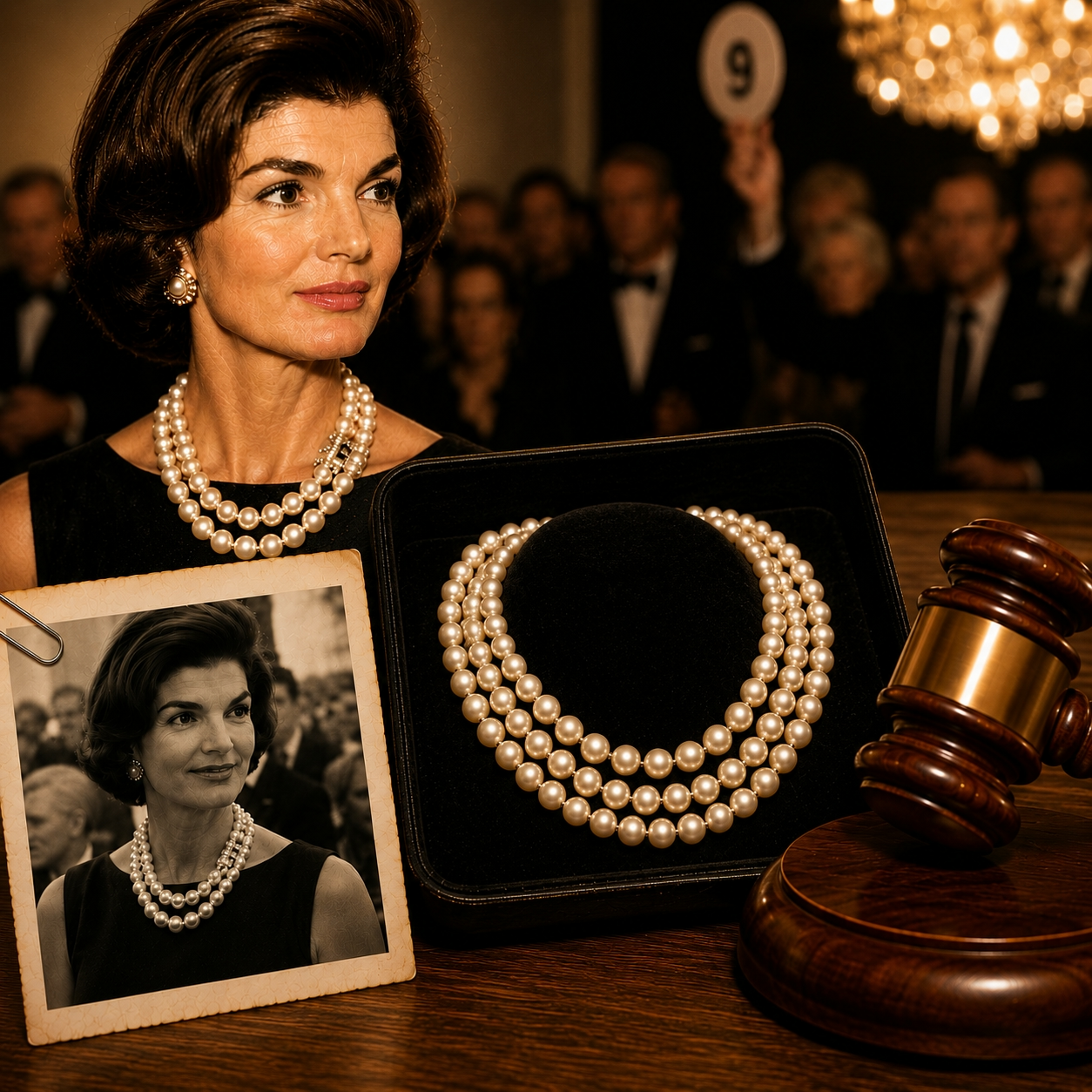
Jackie Kennedy bought the Kenneth Jay Lane costume necklace for $35, choosing it for security reasons while traveling.
The necklace sold at the 1996 Sotheby's auction for nearly a quarter of a million dollars — against a conservative estimate of $500–700.
Franklin Mint reportedly generated $26 million by selling licensed replica necklaces at approximately $200 each.
A Triple Strand of Czech Glass
Jacqueline Kennedy Onassis is still considered the ultimate style icon of the twentieth century. Millions of women around the world copied her hairstyle, makeup, fashion choices, and, of course, her jewelry. In the early 1960s, Jackie frequently appeared at official receptions, on magazine covers, and in newsreels wearing an elegant three-strand necklace of large pearls. Journalists obsessed over it. American women envied it.
Now for the reveal: the pearls were fake. The necklace was created by the American brand Kenneth Jay Lane. It consisted of high-quality Czech glass beads coated with a pearlescent essence, while the Art Deco–style clasp was decorated with inexpensive rhinestones. Jackie purchased it for just $35, choosing costume jewelry over fine jewelry for security reasons while traveling.
She knew it was costume jewelry. The world knew it was costume jewelry. But the power of Jackie's personal brand was stronger than the facts.
"Don't sell a product. Sell a myth, a legacy, and a status symbol. People rarely pay for the physical properties of an object — they pay for the story behind it."
— Pearl Diary EditorialThe Business Magic: Turning $211,500 into $26 Million
In 1996, following Jackie's passing, her personal belongings were offered at Sotheby's legendary auction. When the famous imitation pearl necklace came up for sale, auction experts valued it conservatively at $500–700. After all, it was merely a piece of costume jewelry that had once belonged to a First Lady. Then the room erupted.
Collectors and business executives competed for the necklace as if it were one of the Crown Jewels. By the time the hammer fell, the final price had reached $211,500. A piece of jewelry that originally cost $35 had sold for nearly a quarter of a million dollars. The winning bidder knew exactly what he was doing. His name was Franklin Mint, representing a major American collectibles and jewelry company.
To the average observer, the purchase looked like the extravagance of a wealthy collector. To a business strategist, it was a masterclass in marketing. Franklin Mint did not simply buy a necklace. The company bought the right to reproduce a legend. Soon afterward, it launched a line of officially licensed replicas of Jackie's famous necklace. Each copy sold for approximately $200. The formula was simple: nostalgia, aspiration, and the desire to own a piece of Jackie Kennedy's iconic style.
It worked perfectly. The company sold an enormous number of replicas and reportedly generated $26 million in revenue from the project. Achieving a return of more than one hundred times the original investment on an imitation pearl necklace may be one of the most remarkable success stories in jewelry marketing history.
This story can never be repeated because the original necklace will never return to private ownership. In 2005, Jacqueline Kennedy's necklace was donated to the U.S. government. Today, the historic piece of glass jewelry is displayed in the National Museum of American History in Washington, D.C., as part of the famous collection of jewelry worn by America's First Ladies. It shares gallery space with genuine diamonds and emeralds—and remains every bit as popular. Licensed replicas continue to appear on eBay and other collectors' marketplaces. More than sixty years later, the story is still selling itself.
The lesson endures for every collector, buyer, and jewelry house: people rarely pay for the physical properties of an object. They pay for the story behind it—and for the opportunity to become part of that story. A $35 string of glass beads, worn by the right woman at the right moment in history, became one of the most commercially potent objects ever to pass through an auction room. That is not a coincidence. That is the art of the myth.