It all began with Cleopatra. Few legends have linked the brilliance of jewels with reckless passion, chemistry, and power as enduringly as the story of the last Pharaoh of Egypt.
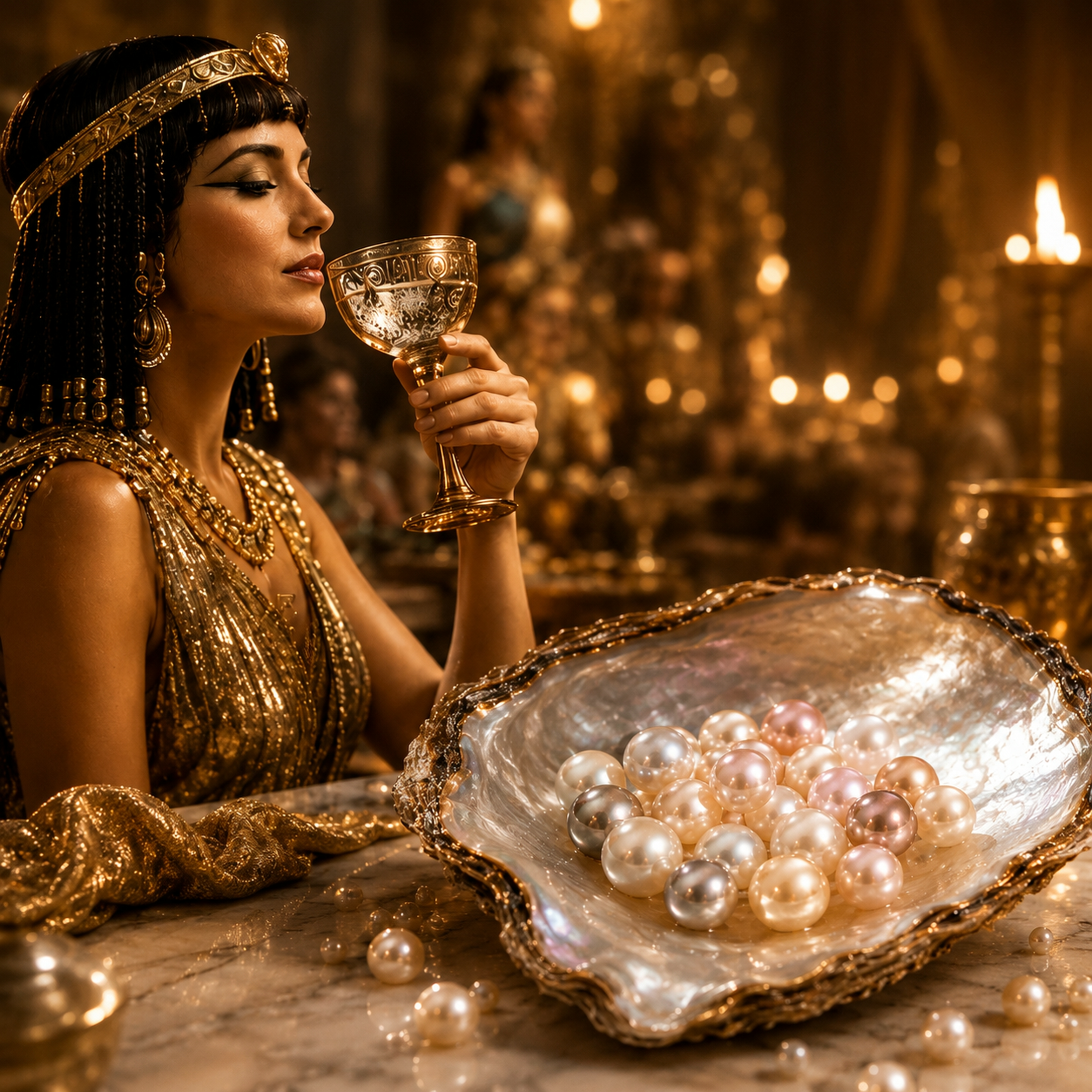
According to legend, Cleopatra wagered with the Roman general Mark Antony, promising to host the most extravagant banquet in history. Looking into his skeptical eyes, she had no doubt she would win.
Removing a magnificent pearl from her ear—an heirloom of dynasties—she dropped it into a goblet filled with strong vinegar. Without the slightest hesitation, the queen drank the dissolved gem.
That single gesture became the beginning of the pearl's mystical reputation.
More than 30 trace minerals, including magnesium, zinc, and iron.
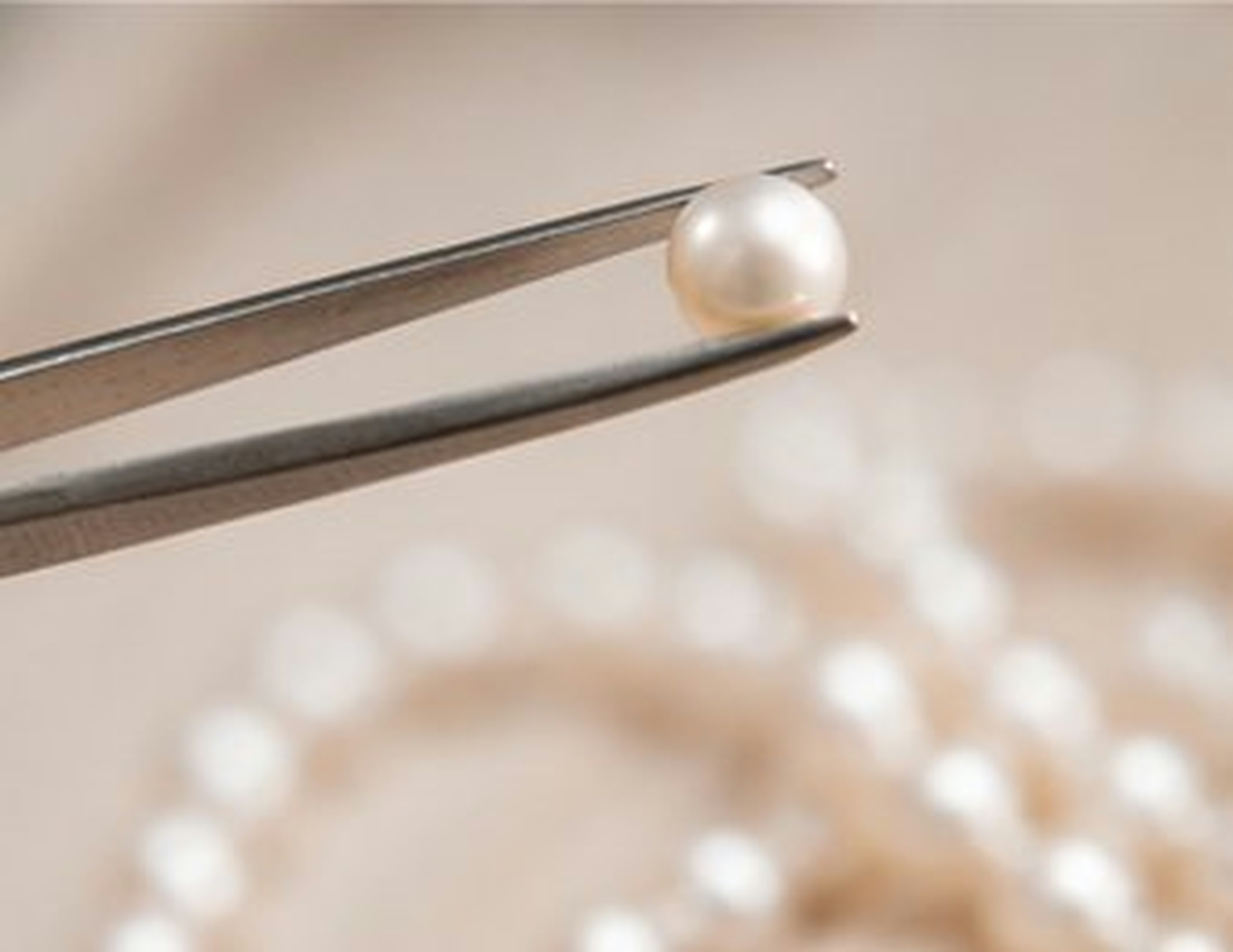
The particle size of the ultra-fine pearl powder used in modern skincare and makeup.
Aragonite, conchiolin, and a rich mineral matrix form pearl's bioactive value.
Pearl as Poison: Myths, Alchemy, and Historical Tragedies
Pearl itself is, of course, not poisonous. It is composed primarily of pure calcium carbonate with a delicate organic matrix. Yet throughout history—and in the shadowy laboratories of alchemists—it became closely associated with toxicology for two entirely opposite reasons: as the most sophisticated method of poisoning and as a powerful antidote.
The Deadly Solvent — The tale of Cleopatra inspired a dangerous and costly fashion among European nobility during the Middle Ages and the Renaissance. Wealthy alchemists and court physicians became convinced that dissolving priceless pearls in strong organic acids—such as concentrated wine vinegar or even aqua regia—would create a noble elixir of youth.
The problem was that acid purification technologies were primitive. These solutions often contained substantial amounts of heavy metals such as arsenic, lead, and mercury, all commonly used in laboratories of the era. Aristocrats eager to demonstrate their wealth and status by drinking "dissolved pearls" frequently suffered severe—and sometimes fatal—poisoning.
"The true poison was never the pearl itself, but the aggressive and contaminated chemistry used to dissolve it."
— Pearl Diary Editorial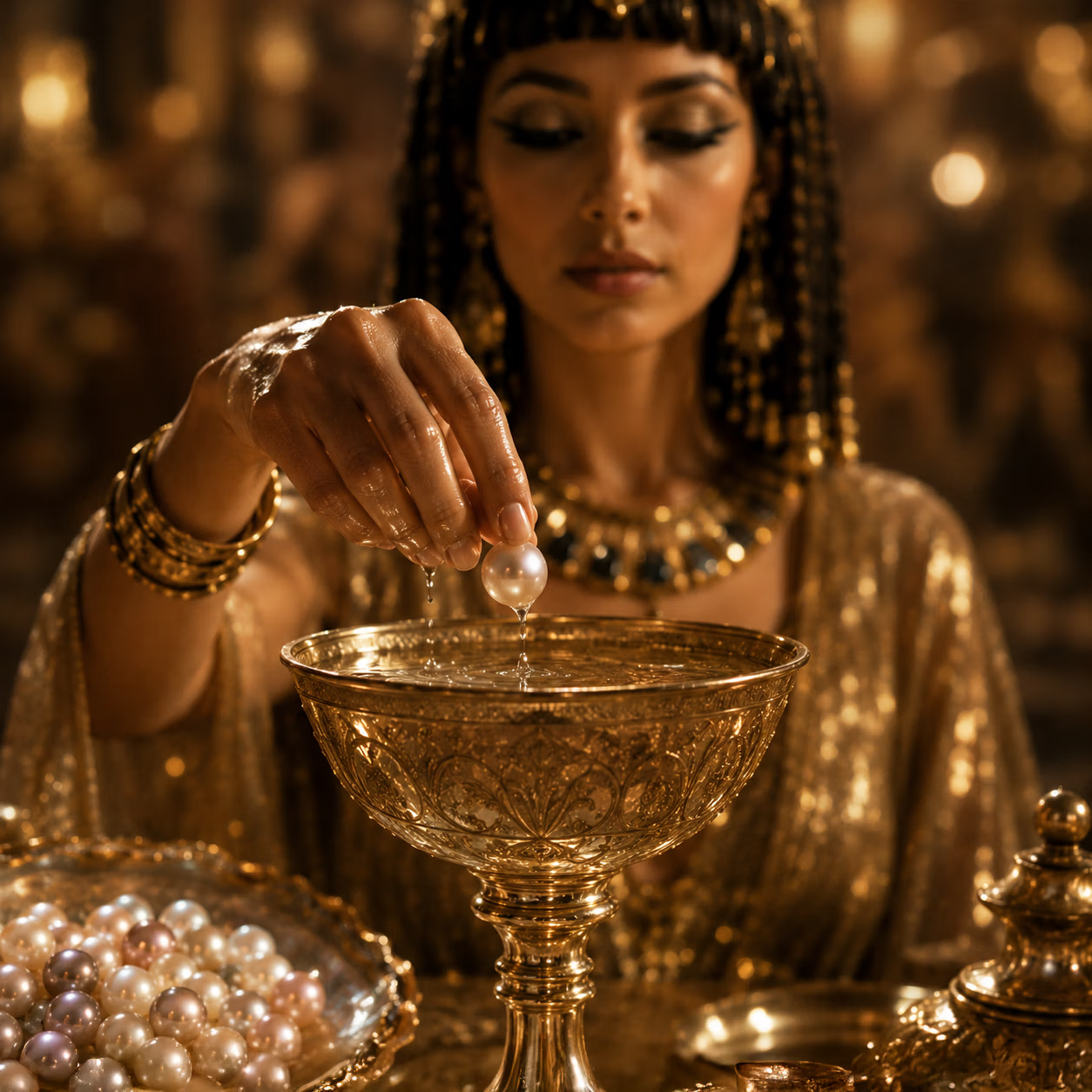
Legend holds that Cleopatra dissolved a priceless pearl in vinegar to win a wager — the gesture that launched the gem's mystical reputation.
The Ancient Antidote to Real Poisons — In Ayurveda and Traditional Chinese Medicine, pearl powder was regarded for centuries as one of the most powerful antidotes available. Emperors and queens, terrified of assassination attempts, routinely consumed it before meals.
Ironically, this belief had a genuine medical foundation.
Calcium carbonate (CaCO₃), the primary component of pearl, is a natural antacid and absorbent. When certain organic toxins or acidic substances entered the stomach, pearl powder could partially neutralize them and slow their absorption into the bloodstream. In effect, it bought precious time—and in some cases may have helped save lives.
Pearl in Modern Cosmetics: From Radiance to Regeneration
Fortunately, no one is dissolving pearls in vinegar for beauty today.
Modern cosmeceuticals rely on advanced technologies, utilizing pearl powder (pearls micronized into an ultra-fine powder) and pearl hydrolysate (a soluble extract in which complex proteins are broken down for optimal skin absorption).
Pearl's biochemical value rests on three pillars:
- Aragonite (a natural form of calcium)
- More than 30 trace minerals including magnesium, zinc, and iron
- Conchiolin, a unique structural protein
The beauty industry values pearl for several scientifically recognized properties.
The "Porcelain Skin" Effect: Brightening and Pigmentation Control — Conchiolin acts as a gentle inhibitor of tyrosinase, the enzyme responsible for melanin production. Over time, pearl-infused formulations may help reduce the appearance of pigmentation, post-acne marks, and uneven skin tone by limiting excessive melanin formation.
Stimulating Collagen Production and Skin Renewal — Research suggests that components of the pearl nacre matrix can stimulate fibroblast activity—the cells responsible for producing collagen and elastin. As a result, pearl-based skincare is often associated with enhanced cellular regeneration and improved skin firmness.
Across Asia, pearl extracts are frequently incorporated into healing creams and post-procedure skincare products designed to support recovery after treatments such as laser resurfacing and chemical peels.
Sebum Control and the Perfect Finish — In both skincare and makeup, ultra-fine pearl powder—often only 2–3 microns in particle size—serves as a natural mineral ingredient.
It effectively absorbs excess sebum without clogging pores, leaving the skin comfortably matte. Thanks to its crystalline structure, it also softly refracts light, creating a subtle "Glass Skin" or soft-focus effect that visually blurs fine lines and pores while giving the complexion a luminous glow from within.
The Cosmetic Industry's Secret: The Story of "Non-Gem-Quality" Pearls
But how does this market really work behind the scenes?
There is one fact that premium beauty brands rarely emphasize:
Most pearl-based cosmetics are made from Akoya pearls that are not suitable for jewelry.
Every Akoya oyster is a remarkable artisan, but not every pearl it produces is flawless. Pearls with surface imperfections, dull luster, or insufficient nacre thickness are rejected during jewelry grading. They can never become necklaces, earrings, or other fine jewelry pieces.
Historically, these pearls were considered production waste.
Yet their biochemical composition is virtually identical to that of the most valuable gem-quality pearls. They contain the same rich combination of aragonite, conchiolin, and trace minerals.
Rather than discarding this material, producers carefully collect and purify it before sending it to pharmaceutical and cosmetic manufacturers. There, it is transformed into ultra-fine powder and bioactive extracts.
In this way, a pearl that was never destined to shine at a gala or adorn a royal jewel finds a different—and perhaps higher—purpose: surrendering its entire biological potential to help create luminous, smooth, porcelain-like skin.
Perhaps that is the greatest irony of all.
The pearl that could not become a jewel becomes something even more intimate—a source of beauty itself.